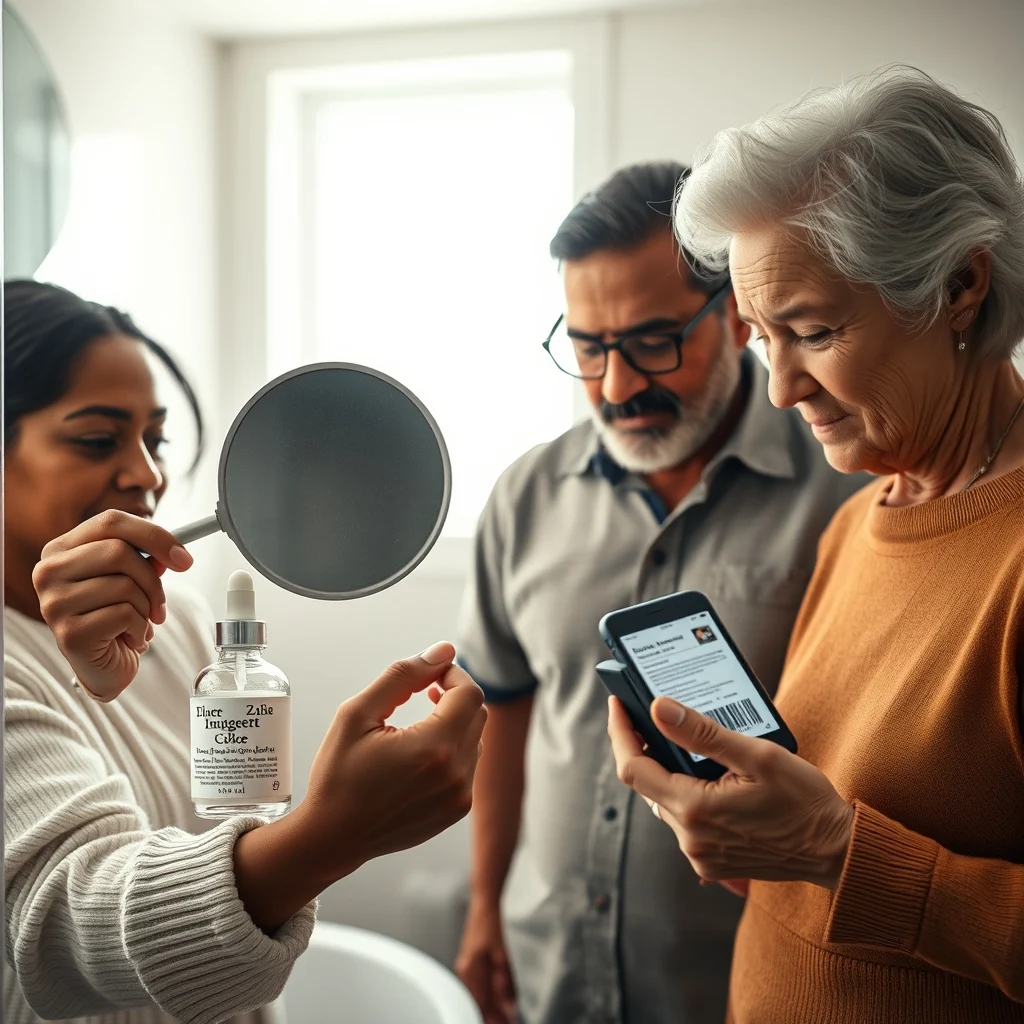
In 2024, the global beauty and personal care market surpassed $600 billion, with clean, sustainable, and ethically sourced products accounting for nearly 30% of new launches. Yet, as consumer demand for transparency grows, so does the complexity of navigating skincare labels. A 2023 survey by the Environmental Working Group (EWG) revealed that 68% of U.S. consumers struggle to identify genuinely non-toxic or eco-friendly beauty products, while 42% admit to purchasing items based on misleading packaging claims. This disconnect between intention and action underscores a critical gap in industry regulation, consumer education, and corporate accountability. The issue spans continents—from the European Union’s stringent SCCS guidelines to the U.S. Food and Drug Administration’s (FDA) limited oversight of cosmetic ingredients—leaving shoppers to decipher a labyrinth of certifications, marketing jargon, and greenwashing tactics.
The modern skincare label is a battleground of competing interests. Consumers, armed with smartphones and ingredient-checking apps like Think Dirty or EWG’s Healthy Living, demand clarity on sourcing, safety, and sustainability. Brands, meanwhile, face pressure to balance profitability with ethical practices, often resorting to ambiguous terms like “natural,” “clean,” or “green” to appeal to conscious buyers. Regulators, caught between industry lobbying and public health concerns, enforce inconsistent standards. For example, the term “organic” in cosmetics is regulated by the USDA in the U.S. but lacks legal definition in many Asian markets. This fragmentation has given rise to third-party certifications—such as COSMOS, Ecocert, and Leaping Bunny—which attempt to fill the void but add another layer of complexity for consumers.
The Evolution of Beauty Labeling: A Timeline of Trust and Transparency
The push for ingredient transparency in beauty is not new. Its roots trace back to the early 20th century, when Upton Sinclair’s *The Jungle* exposed unsanitary practices in the meatpacking industry, sparking the 1906 Pure Food and Drug Act. While cosmetics were initially excluded, public outrage over products like Lash Lure—an eyelash dye linked to blindness in the 1930s—prompted the FDA’s first cosmetic regulations in 1938. However, the law remained largely unchanged until 2022, when the Modernization of Cosmetics Regulation Act (MoCRA) granted the FDA new authority to recall unsafe products and require ingredient disclosure for fragrances and flavors.
- 1960s-1970s: The environmental movement spurred demand for “natural” products, but without standardized definitions. Brands like Dr. Bronner’s and Burt’s Bees emerged, prioritizing plant-based ingredients.
- 1990s: The rise of “greenwashing” led to the first third-party certifications. Ecocert, founded in 1991, became one of the first to verify organic and natural cosmetics in Europe.
- 2004: The EU banned animal testing for cosmetics, setting a global precedent. The U.S. followed suit in 2023 with the FDA’s acknowledgment of non-animal testing methods, though enforcement remains limited.
- 2010s: Apps like Skin Deep (EWG) and Think Dirty launched, empowering consumers to scan barcodes and assess ingredient safety. Social media amplified scrutiny, with influencers and dermatologists debunking misleading claims.
- 2020-Present: The COVID-19 pandemic accelerated demand for “clean” beauty, with sales of certified organic skincare growing by 12% annually. However, a 2021 study by the *Journal of Cleaner Production* found that 53% of “green” beauty products contained at least one synthetic ingredient not disclosed on the label.
How Certifications Work: Separating Signal from Noise
Certifications are the most visible tools for verifying a product’s claims, but their credibility varies widely. The most rigorous programs—such as COSMOS Organic, USDA Organic, and Leaping Bunny—require independent audits, ingredient sourcing documentation, and ongoing compliance checks. For example, COSMOS Organic mandates that 95% of a product’s agro-ingredients and 20% of its total ingredients must be organic, with strict limits on synthetic preservatives. In contrast, lesser-known certifications like “Pure Root Beauty” or “Eco-Friendly Certified” often lack third-party oversight, relying instead on self-reported data from brands.
Dr. Anna-Marie Barnes, a cosmetic chemist and founder of The Eco Well, explains: “Certifications are only as strong as their enforcement. A brand can slap a ‘vegan’ label on a product without verifying its supply chain, but a Leaping Bunny certification requires documentation from every supplier, down to the raw material level.” This disparity creates confusion. A 2023 report by the *Organic Trade Association* found that 78% of consumers assume all “organic” labels are equally regulated, when in reality, only USDA Organic and COSMOS meet international standards.
To illustrate the differences, consider the following table comparing common certifications:
| Certification | Governing Body | Key Requirements | Global Recognition |
|---|---|---|---|
| USDA Organic | U.S. Department of Agriculture | 95% organic ingredients; no synthetic fertilizers or pesticides | U.S., Canada, Japan |
| COSMOS Organic | COSMOS-standard AISBL (EU-based) | 20% organic content; no GMOs, parabens, or phthalates | EU, UK, Australia, South Korea |
| Leaping Bunny | Coalition for Consumer Information on Cosmetics (CCIC) | No animal testing at any stage; supplier audits | U.S., Canada, EU, India |
| Ecocert | Ecocert Group | 95% natural ingredients; 10% organic content | EU, Brazil, China |
| “Clean at Sephora” | Sephora (retailer-defined) | Excludes 50+ ingredients; no third-party verification | U.S., Canada |
The Hidden Costs of Greenwashing: Data and Stakeholder Perspectives
Greenwashing in beauty is not just a marketing nuisance—it has measurable economic and environmental consequences. A 2022 study by *TerraChoice Environmental Marketing* found that 98% of “green” products committed at least one of the “Seven Sins of Greenwashing,” such as vagueness (“all-natural”), irrelevance (“CFC-free” in 2024), or outright fibbing. The financial impact is stark: brands caught greenwashing face an average 15% drop in stock value within six months of exposure, according to a *Harvard Business Review* analysis. For consumers, the stakes are higher. A 2023 investigation by *The Guardian* revealed that products labeled “hypoallergenic” or “dermatologist-tested” often contain fragrances and preservatives linked to contact dermatitis, affecting 1 in 5 adults with sensitive skin.
Stakeholders offer divergent views on the root causes and solutions. Industry representatives argue that regulatory ambiguity forces brands to rely on marketing language. “The term ‘clean beauty’ has no legal definition,” says Linda Wells, founder of *Atelier Beauty* and former editor of *Allure* magazine. “Brands are left to interpret it themselves, which leads to inconsistency. We need a unified standard, not a patchwork of certifications.”
Consumer advocates, however, point to corporate profit motives. “Greenwashing is a calculated risk,” says Nneka Leiba, Vice President of Healthy Living Science at EWG. “Brands know that ‘natural’ and ‘organic’ labels command a 20-30% price premium, even if the product doesn’t meet those standards. The lack of FDA enforcement makes it a low-risk, high-reward strategy.”
Independent researchers highlight the role of cognitive bias. A 2021 study in the *Journal of Consumer Psychology* found that consumers are 40% more likely to trust a product with a green label, even when the ingredients are identical to a non-green alternative. “It’s a form of confirmation bias,” explains Dr. Sarah Roberts, a behavioral economist at the University of Cambridge. “Shoppers see the word ‘organic’ and assume it’s safer, even if they don’t understand the certification behind it.”
Systemic Impacts: From Supply Chains to Environmental Footprints
The ripple effects of opaque beauty labeling extend beyond individual purchases. Ethical sourcing, a cornerstone of “clean” beauty, is particularly vulnerable to greenwashing. A 2023 report by *Fair Labor Association* found that 60% of mica—a mineral used in shimmery cosmetics—is sourced from illegal mines in India and Madagascar, where child labor is rampant. Yet, only 12% of brands disclose their mica suppliers. Certifications like Fair Trade and Fair for Life attempt to address this, but their adoption remains low due to cost and complexity.
Environmental impacts are equally concerning. The beauty industry generates 120 billion units of packaging annually, 95% of which is not recycled, according to *Zero Waste Europe*. While brands like Lush and Ethique market “zero-waste” products, a 2022 audit by *Break Free From Plastic* found that 70% of “sustainable” packaging claims were unsubstantiated. “Biodegradable” labels, for example, often refer to conditions achievable only in industrial composting facilities, not home compost bins. “Consumers think they’re making an eco-friendly choice, but the reality is far more complicated,” says Sian Sutherland, co-founder of *A Plastic Planet*.
Regulatory bodies are beginning to respond. The EU’s Packaging and Packaging Waste Directive, updated in 2023, mandates that all beauty packaging be recyclable, reusable, or compostable by 2030. In the U.S., California’s SB 54 requires plastic producers to reduce waste by 25% by 2032. However, enforcement mechanisms remain underdeveloped, and industry pushback is fierce. The Personal Care Products Council, a trade association representing 600+ brands, argues that “one-size-fits-all regulations stifle innovation” and calls for voluntary industry standards instead.
Competing Visions: Where Stakeholders Diverge
The future of beauty labeling hinges on three competing visions: industry-led self-regulation, government intervention, or consumer-driven market pressure. Each approach has its proponents and pitfalls.
1. Industry-Led Standards: Organizations like the *Clean Beauty Coalition* advocate for voluntary guidelines, arguing that brands are best positioned to drive change. “Regulations move slowly, but the market moves fast,” says Gregg Renfrew, founder of Beautycounter. “Brands that prioritize transparency will win consumer trust.” Critics, however, point to the failures of past voluntary initiatives. The *Sustainable Packaging Coalition*, for example, has seen only 18% of its members meet its 2025 recycling targets.
2. Government Regulation: Policymakers in the EU and U.S. are pushing for stricter labeling laws. The EU’s *Green Claims Directive*, proposed in 2023, would ban generic terms like “eco-friendly” without verified evidence. In the U.S., the FDA’s MoCRA is a step forward, but advocates argue it doesn’t go far enough. “MoCRA is a start, but it’s like putting a Band-Aid on a bullet wound,” says Senator Dianne Feinstein, who co-sponsored the bill. “We need mandatory ingredient disclosure, not just for fragrances but for all components.”
3. Consumer Empowerment: A growing movement advocates for education and tools to help shoppers make informed choices. Apps like *Yuka* and *Good Face Project* use AI to analyze ingredient lists, while platforms like *DoneGood* curate vetted ethical brands. “Knowledge is power,” says Jessica Assaf, co-founder of *Prima Beauty*. “The more consumers demand transparency, the harder it becomes for brands to hide behind greenwashing.” Yet, skeptics question whether education alone can overcome systemic barriers. “Most consumers don’t have the time or expertise to research every ingredient,” says Dr. Roberts. “We need systemic change, not just individual action.”
The beauty industry stands at a crossroads, with pending regulatory milestones and market catalysts poised to reshape the landscape. The EU’s Green Claims Directive, if passed, could set a global precedent for labeling transparency, while the FDA’s implementation of MoCRA in 2024 will test the agency’s ability to enforce new cosmetic safety standards. Meanwhile, the rise of AI-driven ingredient analysis tools may shift power from brands to consumers, forcing greater accountability. Yet, without harmonized global standards, the risk of greenwashing persists. For now, the burden remains on shoppers to scrutinize labels, question claims, and demand proof—because in the absence of regulation, trust is the only currency that matters.
You may also like
-
Generative Engine Optimisation for Beauty Brands: Making Useful Advice Easier to Find
-
The Intersection of Science, Sustainability, and Efficacy in Pure Root Beauty: A Multidimensional Exploration of Clean Ingredient Sourcing and Environmental Stewardship
-
The Comprehensive Examination of Raw Root Extracts in Skincare: Mechanisms, Market Evolution, and Multidisciplinary Stakeholder Perspectives
-
The Comprehensive Ecosystem of Sustainable Root Skincare: Balancing Scientific Innovation, Ethical Sourcing, and Market Disruption in 2024
-
The Comprehensive Framework of Wellness-Driven Eco Homes: A Multidimensional Analysis of Sustainable Living, Non-Toxic Practices, and Holistic Well-Being