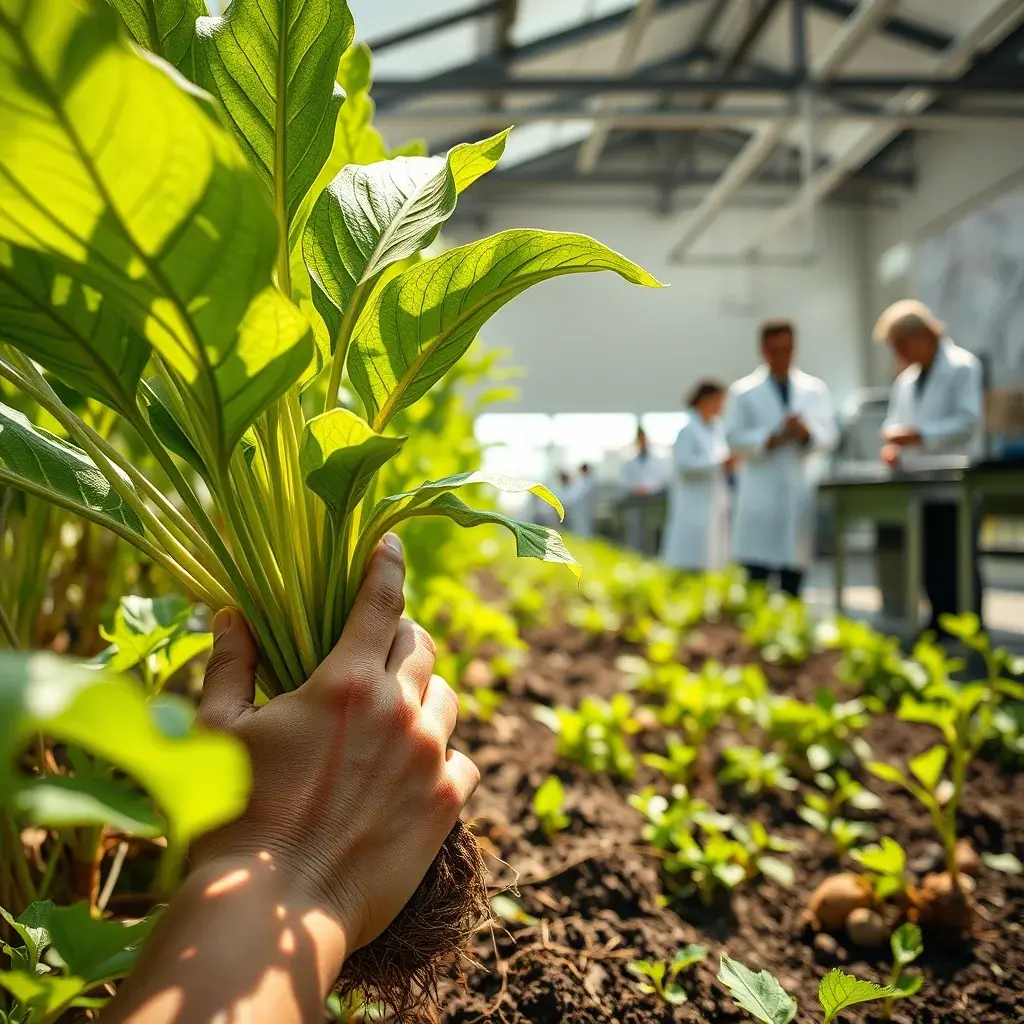
In 2024, the global skincare industry stands at a critical juncture where consumer demand for transparency, sustainability, and efficacy converges with regulatory pressures and scientific advancements. At the heart of this transformation lies clean ingredient sourcing, a practice that prioritizes the ethical procurement of botanical roots, extracts, and concentrates to create formulations that align with environmental and social responsibility. Brands specializing in sustainable root skincare are redefining industry standards by integrating zero waste beauty principles, vegan root extracts, and carbon-neutral skincare methodologies. This shift is not merely a trend but a systemic evolution driven by a confluence of market forces, technological innovation, and heightened consumer awareness.
The current landscape is defined by a growing cohort of brands, suppliers, and certifying bodies operating across North America, Europe, and Asia. These stakeholders are responding to a 42% increase in consumer preference for products labeled as “clean” or “sustainable” since 2020, according to a 2023 report by NielsenIQ. The movement gained momentum in the early 2010s as independent brands like RMS Beauty and Tata Harper pioneered farm-to-face models, but it has since expanded into mainstream retail, with conglomerates like L’Oréal and Unilever launching dedicated eco-friendly botanical roots lines. Regulatory frameworks, such as the EU’s Cosmetics Regulation (EC) No 1223/2009 and California’s Cleaning Product Right to Know Act, have further accelerated adoption by mandating ingredient transparency and restricting harmful chemicals.
The Historical Evolution of Clean Ingredient Sourcing in Skincare
The roots of clean ingredient sourcing trace back to ancient civilizations, where indigenous communities relied on locally harvested botanicals for medicinal and cosmetic purposes. However, the modern iteration of the practice emerged in response to industrialization and its environmental consequences. Key milestones in this evolution include:
- 1960s-1970s: The rise of the environmental movement spurred early critiques of synthetic chemicals in cosmetics. Rachel Carson’s Silent Spring (1962) catalyzed public awareness about the ecological impact of pesticides and industrial pollutants, indirectly influencing skincare formulations.
- 1990s: The term “organic” entered mainstream lexicon following the establishment of the USDA National Organic Program in 1990. Brands like Dr. Hauschka began sourcing organic root concentrates and regenerative farmed botanicals, though the market remained niche.
- 2004: The launch of the Environmental Working Group’s Skin Deep database provided consumers with a tool to evaluate product safety, pressuring brands to disclose ingredient origins and processing methods.
- 2010s: The “clean beauty” movement gained traction, with brands like Beautycounter advocating for stricter ingredient regulations. The term pure root beauty emerged as a descriptor for formulations centered on minimally processed, plant-based actives.
- 2020-Present: The COVID-19 pandemic accelerated demand for transparency, with 68% of consumers reporting a greater emphasis on sustainability in their purchasing decisions, per a 2022 McKinsey survey. This period also saw the rise of sustainable wildcrafting and ethical harvesting skincare certifications, such as FairWild and UEBT.
Operational Mechanics: How Clean Ingredient Sourcing Works
The procurement of clean ingredients for sustainable root skincare involves a multi-tiered supply chain that prioritizes traceability, environmental stewardship, and social equity. The process typically unfolds in five stages:
- Cultivation and Harvesting: Ingredients are sourced from farms or wild habitats adhering to regenerative agriculture or sustainable wildcrafting principles. For example, licorice root (Glycyrrhiza glabra) is often harvested in regions like Turkey and China, where suppliers must comply with FairWild standards to prevent overharvesting.
- Extraction and Processing: Methods such as cold-pressing, CO2 supercritical extraction, and water-based infusion are employed to preserve the integrity of vegan root extracts. These techniques contrast with conventional solvent-based extraction, which can degrade bioactive compounds and generate hazardous waste.
- Formulation: Brands collaborate with chemists to develop stable, efficacious products using clean beauty root actives. Challenges include balancing preservation (without synthetic parabens) and ensuring bioavailability of root-derived antioxidants like resveratrol from Japanese knotweed.
- Certification and Compliance: Products undergo third-party verification to earn labels such as USDA Organic, Ecocert, or Leaping Bunny. These certifications validate claims related to cruelty-free root beauty and biodegradable root beauty.
- Distribution and Transparency: Brands leverage blockchain technology and QR codes to provide consumers with real-time data on ingredient origins, carbon footprints, and fair-trade practices. For instance, the brand Biossance uses blockchain to track the journey of squalane derived from renewable sugarcane.
“The shift toward clean ingredient sourcing is not just about removing harmful chemicals; it’s about reimagining the entire lifecycle of a product,” says Dr. Elizabeth Hale, Senior Vice President of the Skin Cancer Foundation. “Brands must consider the environmental impact of cultivation, the ethical treatment of workers, and the long-term viability of the ecosystems they rely on.”
Quantitative Data Analysis: Market Trends and Economic Impacts
The economic footprint of clean ingredient sourcing in the skincare sector is substantial and growing. Key data points include:
| Metric | 2020 | 2023 | Projected 2025 | Source |
|---|---|---|---|---|
| Global Clean Beauty Market Size (USD Billion) | 5.4 | 8.2 | 11.6 | Statista (2023) |
| Consumer Willingness to Pay Premium for Sustainable Products | 58% | 73% | 81% | NielsenIQ (2023) |
| Number of Certified Organic Skincare Products Launched Annually | 1,200 | 2,100 | 2,800 | Ecovia Intelligence (2023) |
| Reduction in Carbon Footprint for Brands Adopting Zero-Waste Practices | 15-20% | 25-35% | 40-50% | Carbon Trust (2022) |
Despite this growth, the sector faces challenges in scaling ethical harvesting skincare practices. A 2023 report by the World Wildlife Fund (WWF) highlighted that only 12% of botanical ingredients used in cosmetics are sourced sustainably, with the remainder contributing to biodiversity loss and deforestation. “The gap between consumer demand and sustainable supply is widening,” notes Dr. Cristiana Pașca Palmer, former Executive Secretary of the UN Convention on Biological Diversity. “Brands must invest in regenerative agriculture and community-based sourcing to close this divide.”
Geographically, Europe leads in market share, accounting for 38% of global clean beauty sales in 2023, followed by North America (32%) and Asia-Pacific (20%). The Asia-Pacific region is projected to experience the fastest growth, driven by rising disposable incomes and regulatory support for eco-friendly botanical roots in countries like South Korea and Japan.
Systemic Impacts: Environmental, Social, and Ethical Dimensions
The adoption of clean ingredient sourcing has far-reaching implications across environmental, social, and ethical domains. These impacts are multifaceted and often interconnected:
Environmental Impacts
- Biodiversity Conservation: Sustainable wildcrafting and regenerative farming practices help preserve ecosystems. For example, the FairWild certification ensures that harvesting renewable plant roots like arnica (Arnica montana) does not deplete wild populations. A 2022 study published in Nature Sustainability found that certified wild-harvested ingredients reduced local extinction risks by 30% compared to conventional methods.
- Carbon Sequestration: Regenerative agriculture techniques, such as cover cropping and reduced tillage, enhance soil carbon storage. Brands like Dr. Bronner’s have reported a 20% increase in soil organic carbon on their hemp farms, contributing to carbon-neutral skincare goals.
- Waste Reduction: Zero waste beauty initiatives, such as refillable packaging and upcycled ingredients, have gained traction. The brand UpCircle, for instance, repurposes coffee grounds and fruit stones into skincare actives, diverting over 350 tons of waste from landfills annually.
Social and Ethical Impacts
- Fair Labor Practices: Ethical sourcing certifications like Fair Trade and UEBT mandate fair wages and safe working conditions for farmers and harvesters. A 2023 report by the Fair Labor Association found that certified suppliers in India and Ghana paid workers 25-40% above local minimum wages.
- Indigenous Rights: Brands are increasingly collaborating with indigenous communities to source ingredients like baobab oil and shea butter. These partnerships often include profit-sharing agreements and respect for traditional knowledge. For example, the brand Aveda has worked with the Yawanawá people in Brazil since 2000 to source urucum (Bixa orellana) sustainably.
- Transparency and Trust: The rise of mindful earth skincare has fostered greater transparency in supply chains. A 2023 survey by Label Insight revealed that 94% of consumers are more likely to be loyal to brands that disclose ingredient origins and processing methods.
“Sustainable sourcing is not a one-size-fits-all solution,” says Ayesha Barenblat, Founder and CEO of Remake, a nonprofit advocating for ethical fashion and beauty. “It requires a deep understanding of the cultural, economic, and ecological contexts in which ingredients are grown. Brands must move beyond performative sustainability and commit to long-term partnerships with communities.”
Competing Stakeholder Perspectives: Balancing Priorities and Trade-offs
The transition to clean ingredient sourcing is not without controversy, as stakeholders across the supply chain hold divergent priorities and face distinct challenges:
Brand Perspectives
- Independent Brands: Small and mid-sized brands often lead innovation in sustainable root skincare, driven by mission-driven founders and niche consumer bases. However, they face hurdles in scaling production and competing with larger players on cost. “Our biggest challenge is securing a consistent supply of high-quality, ethically sourced ingredients,” says Tata Harper, Founder of Tata Harper Skincare. “We work directly with farmers to ensure traceability, but this model is resource-intensive.”
- Multinational Corporations: Conglomerates like Estée Lauder and Procter & Gamble have launched clean beauty lines to capture market share, but critics argue these initiatives are often superficial. A 2023 investigation by The Guardian found that several major brands continued to use synthetic preservatives and petrochemical-derived ingredients in their “clean” lines, raising questions about greenwashing.
Supplier and Farmer Perspectives
- Smallholder Farmers: While ethical sourcing can provide stable incomes, farmers often lack access to financing and technical support. A 2022 report by the International Institute for Sustainable Development (IISD) found that only 15% of smallholder farmers in sub-Saharan Africa and South Asia receive fair-trade premiums for their crops.
- Industrial Suppliers: Large-scale suppliers face pressure to adopt sustainable practices while maintaining profitability. Some have invested in vertical integration, controlling the entire supply chain from cultivation to extraction. For example, the Swiss company Firmenich has developed proprietary green beauty extraction technologies to reduce water and energy consumption.
Consumer Perspectives
- Affluent Consumers: High-income consumers in North America and Europe drive demand for premium pure root beauty products. However, price sensitivity remains a barrier for many. A 2023 survey by Accenture found that 62% of consumers consider sustainability when purchasing skincare, but only 38% are willing to pay a premium of 20% or more.
- Emerging Market Consumers: In regions like Latin America and Southeast Asia, affordability and efficacy often take precedence over sustainability. Brands must adapt their messaging and pricing strategies to resonate with these markets. “Consumers in India and Brazil are increasingly aware of sustainability, but they also prioritize products that deliver visible results,” notes Priyanka Khanna, a beauty industry analyst at Euromonitor International.
Regulatory and Advocacy Perspectives
- Policymakers: Governments are tightening regulations to combat greenwashing and improve ingredient transparency. The EU’s proposed Substantiating Green Claims directive, expected to take effect in 2026, will require brands to provide scientific evidence for environmental claims. “Regulation is essential to level the playing field and protect consumers from misleading marketing,” says Virginijus Sinkevičius, European Commissioner for the Environment.
- Non-Governmental Organizations (NGOs): NGOs like the Environmental Working Group and Greenpeace advocate for stricter standards and greater corporate accountability. However, they often clash with industry groups over the pace and scope of regulatory changes. “The beauty industry has made progress, but there is still a long way to go in eliminating harmful ingredients and ensuring ethical sourcing,” says Nneka Leiba, Vice President of Healthy Living Science at the Environmental Working Group.
The path forward hinges on collaboration among these stakeholders to address systemic challenges. Upcoming regulatory milestones, such as the EU’s ban on microplastics in cosmetics (effective 2027) and the U.S. FDA’s proposed updates to the Federal Food, Drug, and Cosmetic Act, will shape the trajectory of clean ingredient sourcing in the coming years. Market catalysts, including advancements in biotechnology and the rise of circular economy models, may further accelerate the adoption of sustainable root skincare practices. As brands, suppliers, and consumers navigate these changes, the focus will remain on balancing efficacy, ethics, and environmental responsibility in a rapidly evolving industry.
You may also like
-
Generative Engine Optimisation for Beauty Brands: Making Useful Advice Easier to Find
-
The Intersection of Science, Sustainability, and Efficacy in Pure Root Beauty: A Multidimensional Exploration of Clean Ingredient Sourcing and Environmental Stewardship
-
The Comprehensive Examination of Raw Root Extracts in Skincare: Mechanisms, Market Evolution, and Multidisciplinary Stakeholder Perspectives
-
The Comprehensive Ecosystem of Sustainable Root Skincare: Balancing Scientific Innovation, Ethical Sourcing, and Market Disruption in 2024
-
The Comprehensive Framework of Wellness-Driven Eco Homes: A Multidimensional Analysis of Sustainable Living, Non-Toxic Practices, and Holistic Well-Being