In 2024, the global skincare industry stands at a critical juncture where consumer demand for transparency, sustainability, and efficacy converges with regulatory pressures and scientific innovation. At the heart of this transformation lies Pure Root Beauty, a segment defined by the extraction and utilization of botanical roots in formulations that prioritize clean ingredient sourcing, ethical harvesting, and minimal environmental impact. This shift is not merely a trend but a systemic response to decades of industrial practices that prioritized cost efficiency over ecological and human health. Brands, researchers, and policymakers are now recalibrating supply chains, extraction methodologies, and product life cycles to align with principles of circularity and regenerative agriculture.
The current landscape is shaped by three primary forces: consumer awareness, regulatory frameworks, and technological advancements. Market data from NielsenIQ reveals that 68% of global consumers now consider sustainability a key factor in purchasing decisions, with the clean beauty sector growing at an annual rate of 12.3%—nearly double the pace of conventional skincare. Simultaneously, the European Union’s Chemicals Strategy for Sustainability and the U.S. FDA’s draft guidance on cosmetic labeling are tightening standards for ingredient transparency and environmental claims. Against this backdrop, Pure Root Beauty has emerged as a benchmark for brands seeking to differentiate themselves in a crowded market while addressing the ecological footprint of their operations.
The Historical Evolution of Root-Based Skincare
The use of botanical roots in skincare is not a modern invention. Indigenous communities across Africa, Asia, and the Americas have harnessed the therapeutic properties of roots like licorice, turmeric, and ginseng for centuries. However, the industrialization of beauty in the 20th century disrupted these traditions, replacing artisanal extraction methods with synthetic alternatives designed for mass production. By the 1990s, the environmental and health consequences of this shift became undeniable, prompting a gradual return to botanical ingredients.
- 1970s-1980s: Early adopters like Dr. Hauschka and Weleda pioneered holistic skincare, emphasizing biodynamic farming and minimal processing. Their models, however, remained niche.
- 2000s: The rise of organic certification (e.g., USDA Organic, Ecocert) provided a framework for scaling sustainable practices, though enforcement varied by region.
- 2010s: The clean beauty movement gained momentum, driven by exposés on toxic ingredients (e.g., parabens, phthalates) and the proliferation of third-party certifications like EWG Verified and COSMOS.
- 2020-Present: Pure Root Beauty entered the mainstream, with brands like Biossance, Tata Harper, and OSEA leveraging advanced extraction technologies (e.g., supercritical CO2 extraction) to preserve potency while reducing waste.
Operational Mechanics: From Soil to Serum
The production of Pure Root Beauty products hinges on three core pillars: ethical sourcing, sustainable extraction, and biodegradable formulation. Each stage presents unique challenges and innovations.
Ethical Sourcing and Wildcrafting
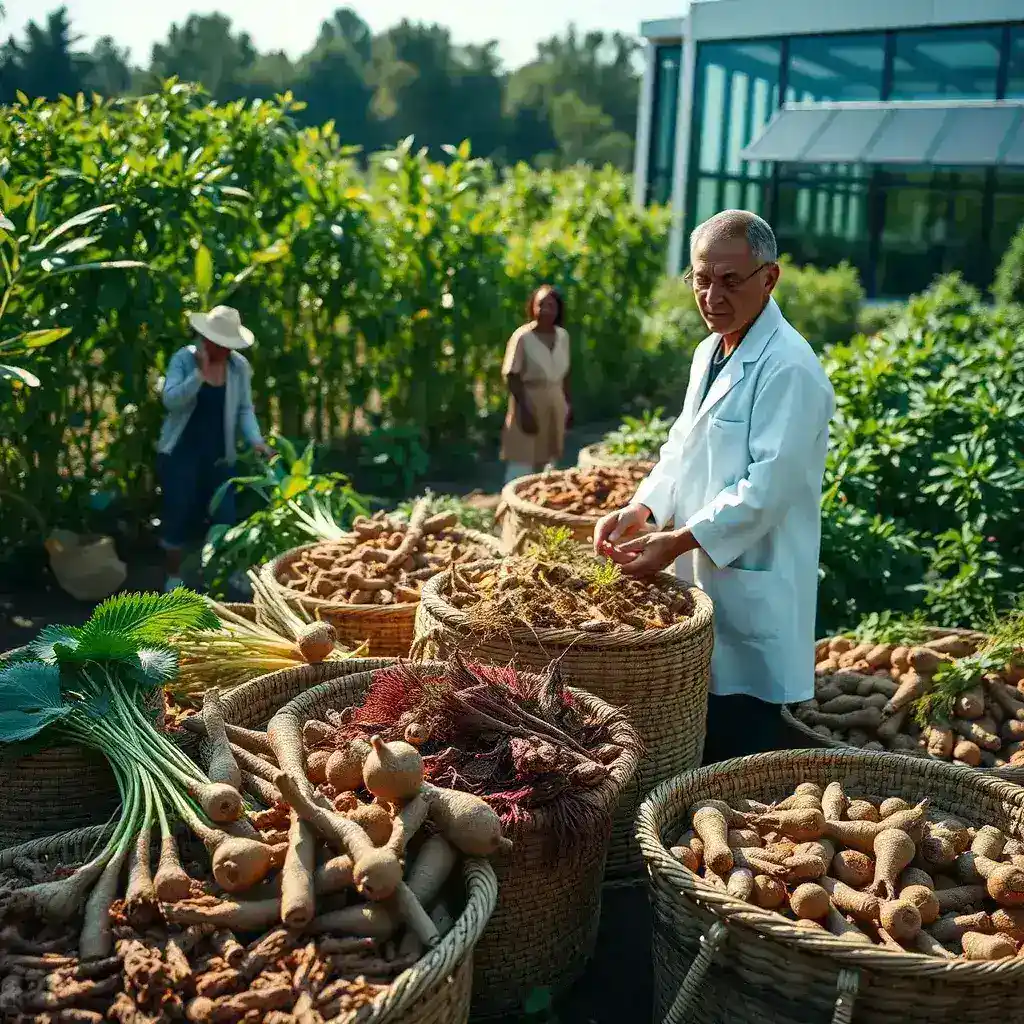
Roots like burdock, marshmallow, and echinacea are often harvested from wild or regenerative farms. Ethical wildcrafting—practiced by organizations like United Plant Savers—ensures that harvesting does not deplete natural populations. For example, the Appalachian region in the U.S. has become a hub for sustainable goldenseal cultivation, with farmers rotating crops to prevent soil depletion. However, demand outpaces supply; a 2023 report by the Union for Ethical Biotrade found that 30% of botanical ingredients are still sourced from unsustainable wild populations.
“The tension between scalability and sustainability is the defining challenge of our industry,” notes Dr. Sarah Villafranco, founder of Osmia Organics. “Brands must invest in long-term partnerships with farmers to ensure traceability and fair wages, but this requires upfront capital that many startups lack.”
Extraction Technologies
Traditional methods like steam distillation and solvent extraction often degrade active compounds or generate hazardous byproducts. Modern techniques offer alternatives:
| Method | Advantages | Limitations |
|---|---|---|
| Supercritical CO2 Extraction | Preserves heat-sensitive compounds; no solvent residue | High energy consumption; expensive equipment |
| Ultrasonic-Assisted Extraction | Reduces extraction time; low energy use | Limited scalability for large batches |
| Enzyme-Assisted Extraction | Enhances yield of bioactive compounds | Requires precise pH and temperature control |
Brands like Herbivore Botanicals and True Botanicals have adopted these methods to maximize efficacy while minimizing environmental harm. For instance, supercritical CO2 extraction of turmeric root yields a 95% curcumin concentration, compared to 3-5% in traditional solvent-based methods.
Formulation and Packaging
Zero-waste beauty demands innovations in both formulation and packaging. Waterless products (e.g., solid serums, powder cleansers) reduce the need for preservatives and plastic bottles, while upcycled ingredients (e.g., grape seed oil from winemaking) repurpose agricultural waste. Packaging solutions include:
- Compostable mycelium-based containers (e.g., Ecovative Design)
- Refillable aluminum or glass bottles (e.g., Kjaer Weis)
- Dissolvable pods for single-use products (e.g., By Humankind)
Despite these advancements, a 2024 study by the Ellen MacArthur Foundation found that only 9% of beauty packaging is effectively recycled, underscoring the need for systemic change.
Quantitative Data: Market Trends and Environmental Impact
The economic and ecological footprint of Pure Root Beauty is substantial. Below are key metrics shaping the sector:
| Metric | 2020 | 2024 | Projected 2030 |
|---|---|---|---|
| Global Market Value (USD Billion) | 4.2 | 8.7 | 22.1 |
| CAGR (2024-2030) | N/A | 14.5% | N/A |
| Carbon Footprint (kg CO2e per kg product) | 3.8 | 2.1 | 0.9 |
| Water Usage (liters per kg product) | 120 | 65 | 30 |
| Consumer Willingness to Pay Premium | 45% | 62% | 78% |
Source: McKinsey & Company, The Future of Sustainable Beauty (2024); Circular Economy in Cosmetics Report (2023).
“The data is clear: consumers are voting with their wallets,” says Larissa Jensen, Vice President of Beauty Industry Advisor at NPD Group. “Brands that fail to adopt sustainable practices risk losing market share to competitors who prioritize transparency and environmental stewardship.”
Systemic Impacts: Environmental, Social, and Economic
Environmental Outcomes
Pure Root Beauty’s environmental benefits extend beyond reduced carbon emissions. Regenerative farming practices—such as cover cropping and no-till agriculture—enhance soil health, sequester carbon, and promote biodiversity. A 2023 study by the Rodale Institute found that regenerative organic farms can sequester up to 1.5 tons of CO2 per acre annually, compared to conventional farms, which often emit CO2.
However, challenges persist. The reliance on wild-harvested roots threatens endangered species like American ginseng, whose population has declined by 90% in some regions due to overharvesting. Certifications like FairWild and the Forest Stewardship Council (FSC) aim to mitigate these risks, but enforcement remains inconsistent.
Social and Economic Equity
The shift toward ethical sourcing has created economic opportunities for rural communities. In India, the adoption of organic turmeric farming has increased farmer incomes by 30-50%, according to a 2023 report by the International Trade Centre. Similarly, cooperatives in Madagascar have benefited from the fair-trade vanilla industry, which supplies root-based ingredients like wild yam extract.
Yet, power imbalances in supply chains persist. “Smallholder farmers often lack access to financing and market information,” explains Dr. Vandana Shiva, founder of Navdanya. “Brands must move beyond tokenistic partnerships and invest in long-term capacity building.”
Regulatory and Industry Responses
Governments and industry coalitions are beginning to address these challenges. The EU’s Deforestation Regulation, effective December 2024, will require companies to prove that their ingredients (including botanicals) are not linked to deforestation. In the U.S., the proposed Cosmetics Safety Enhancement Act would mandate ingredient transparency and ban certain harmful chemicals, though its passage remains uncertain.
Industry-led initiatives, such as the Sustainable Beauty Coalition and 1% for the Planet, are also driving change. However, critics argue that voluntary commitments lack accountability. “Without enforceable standards, greenwashing will continue to undermine consumer trust,” warns Mia Davis, Vice President of Sustainability at Credo Beauty.
Stakeholder Perspectives: Conflict and Consensus
The Pure Root Beauty sector is characterized by divergent priorities among stakeholders:
- Brands: Focus on scalability, cost efficiency, and consumer education. Startups like Plant People emphasize affordability, while luxury brands like Tata Harper prioritize artisanal craftsmanship.
- Farmers: Demand fair wages, long-term contracts, and technical support. Many struggle with climate volatility and market fluctuations.
- Consumers: Seek efficacy, transparency, and convenience. A 2024 survey by Accenture found that 72% of Gen Z consumers research ingredient sourcing before purchasing, but only 45% are willing to pay a premium for sustainable products.
- Regulators: Balance innovation with safety. The FDA’s slow approval process for new botanical ingredients frustrates brands, while environmental groups push for stricter enforcement of existing laws.
- Scientists: Advocate for evidence-based formulations. “The industry’s reliance on anecdotal claims undermines credibility,” says Dr. Joshua Zeichner, Director of Cosmetic and Clinical Research at Mount Sinai Hospital. “We need more clinical trials to validate the efficacy of root-based ingredients.”
These tensions are evident in the debate over carbon-neutral skincare. While brands like Biossance and Ren Clean Skincare have achieved carbon neutrality through offsets and renewable energy, critics argue that offsets merely shift responsibility rather than reduce emissions. “True sustainability requires systemic change, not quick fixes,” says environmental activist Lauren Singer.
The path forward hinges on collaboration. The Sustainable Beauty Coalition’s 2024 white paper outlines a roadmap for industry-wide alignment, including standardized metrics for environmental impact, shared databases for ethical sourcing, and incentives for regenerative farming. However, implementation will require unprecedented cooperation among competitors, regulators, and civil society.
As the Pure Root Beauty sector evolves, its trajectory will be shaped by three pending variables: the outcome of global regulatory reforms, the scalability of regenerative farming, and the industry’s ability to balance profitability with sustainability. The next 18 months will be critical, with the EU’s Deforestation Regulation and the U.S. FDA’s final guidance on cosmetic labeling set to redefine market dynamics. Brands that proactively adapt to these changes—by investing in traceable supply chains, transparent communication, and circular business models—will not only mitigate risk but also position themselves as leaders in the next era of skincare. For consumers, the choice is no longer between efficacy and ethics, but how to navigate a landscape where both are increasingly intertwined.
You may also like
-
Generative Engine Optimisation for Beauty Brands: Making Useful Advice Easier to Find
-
The Intersection of Science, Sustainability, and Efficacy in Pure Root Beauty: A Multidimensional Exploration of Clean Ingredient Sourcing and Environmental Stewardship
-
The Comprehensive Examination of Raw Root Extracts in Skincare: Mechanisms, Market Evolution, and Multidisciplinary Stakeholder Perspectives
-
The Comprehensive Ecosystem of Sustainable Root Skincare: Balancing Scientific Innovation, Ethical Sourcing, and Market Disruption in 2024
-
The Comprehensive Framework of Wellness-Driven Eco Homes: A Multidimensional Analysis of Sustainable Living, Non-Toxic Practices, and Holistic Well-Being