In 2024, the global skincare market surpassed $180 billion, with clean and sustainable beauty segments growing at an annual rate of 12%, nearly double the industry average. Yet, as demand for ethical products rises, so does the prevalence of misleading claims. A 2023 study by the Environmental Working Group (EWG) found that 68% of skincare products marketed as “natural” or “green” contained at least one synthetic ingredient, while 42% included compounds restricted or banned in the European Union. The discrepancy between consumer expectations and product reality has turned label literacy into a critical skill for safety, efficacy, and environmental responsibility. This issue affects not only individual health but also supply chain ethics, regulatory compliance, and corporate accountability across North America, Europe, and Asia-Pacific markets.
The ability to read skincare labels accurately determines whether consumers can avoid harmful chemicals, support ethical brands, and reduce environmental harm. Misleading claims—such as “chemical-free,” “dermatologist-approved,” or “earth-friendly”—often lack standardized definitions, leaving interpretation to manufacturers. Regulatory bodies like the U.S. Food and Drug Administration (FDA) and the European Commission’s Scientific Committee on Consumer Safety (SCCS) enforce ingredient safety but do not regulate marketing language with the same rigor. This gap has allowed greenwashing to proliferate, particularly in online marketplaces where third-party sellers operate with minimal oversight. The problem is compounded by the rise of influencer marketing, where unregulated endorsements amplify unverified claims.
The Evolution of Skincare Labeling: From Caveat Emptor to Consumer Empowerment
Skincare labeling has undergone significant transformation since the early 20th century, shaped by scientific advancements, public health crises, and advocacy movements. Key milestones include:
- 1938: The U.S. Federal Food, Drug, and Cosmetic Act granted the FDA authority to oversee cosmetic safety, though pre-market approval remained voluntary.
- 1960s–1970s: The environmental movement spurred demand for transparency, leading to the creation of the EWG in 1993 and the launch of its Skin Deep database in 2004, which rates products based on ingredient toxicity.
- 2009: The EU Cosmetics Regulation (EC) No 1223/2009 banned 1,328 chemicals from cosmetics and mandated full ingredient disclosure, setting a global benchmark.
- 2018: California’s Safe Cosmetics Act required companies to disclose ingredients linked to cancer or reproductive harm, prompting nationwide changes in labeling practices.
- 2023: The FDA proposed updates to its cosmetic regulations for the first time in 80 years, including mandatory facility registration and adverse event reporting, though marketing claims remained unaddressed.
Despite these advancements, labeling standards remain fragmented. The U.S. lacks a legal definition for terms like “clean,” “organic,” or “sustainable,” while the EU’s definitions are often misapplied by brands operating in both markets. This inconsistency has created a landscape where consumers must navigate a patchwork of certifications, self-regulated claims, and regional laws.
Decoding the Label: A Step-by-Step Framework
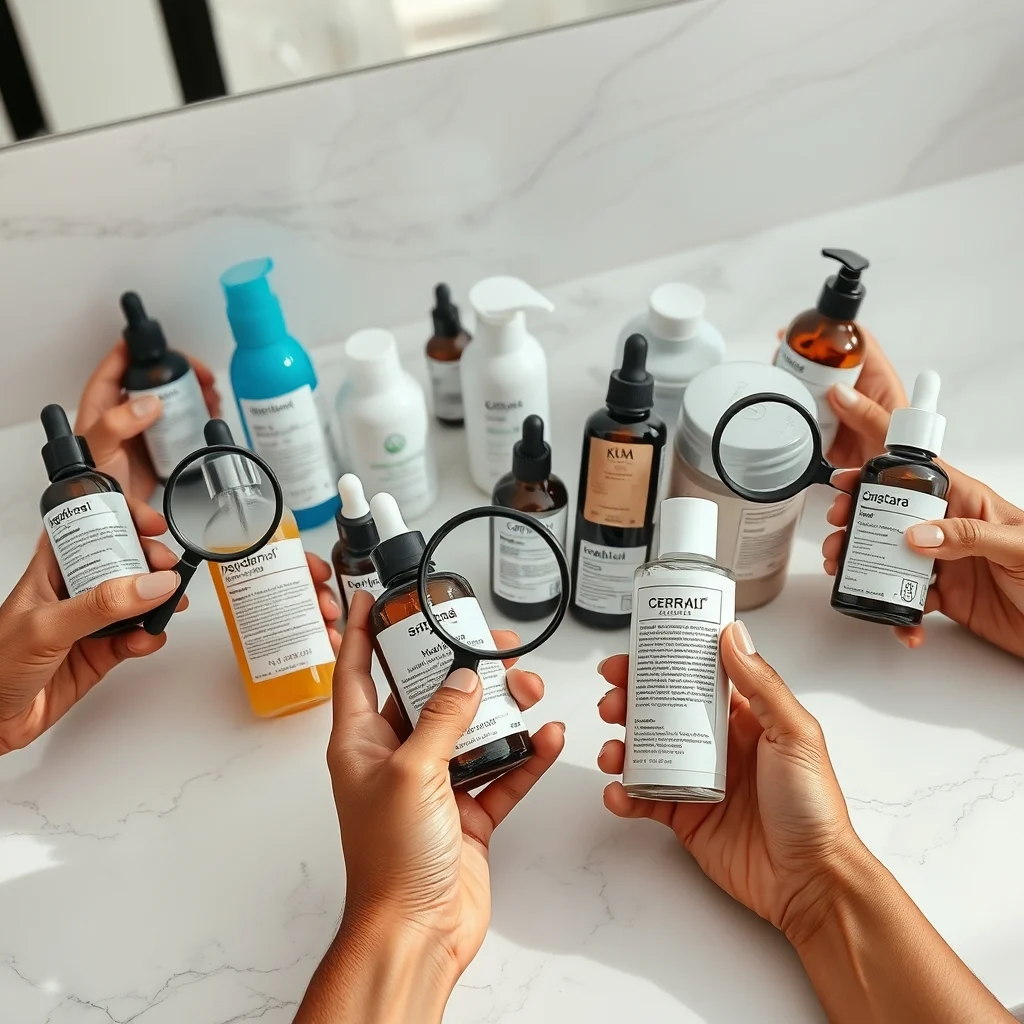
Reading a skincare label requires a systematic approach to distinguish between regulated data and marketing fluff. The following framework, endorsed by dermatologists and toxicologists, provides a structured method for evaluation:
1. Ingredient List: The Only Mandatory Truth
By law, ingredients must be listed in descending order of concentration, with those comprising less than 1% appearing in any order at the end. The International Nomenclature of Cosmetic Ingredients (INCI) standardizes names globally, though Latin terms (e.g., Butyrospermum parkii for shea butter) can obscure recognition. Consumers should cross-reference unfamiliar ingredients with databases like EWG’s Skin Deep or the EU’s CosIng database, which provide hazard ratings based on peer-reviewed studies.
“The ingredient list is the only part of the label that’s legally binding,” says Dr. Ava Shamban, a board-certified dermatologist and author of Heal Your Skin. “Yet, most consumers skip it entirely, relying instead on front-panel claims that are often designed to mislead.”
2. Certifications: Verifying Third-Party Oversight
Certifications offer a shortcut for verifying claims, but not all are created equal. The most rigorous include:
| Certification | Governing Body | Key Requirements | Limitations |
|---|---|---|---|
| USDA Organic | U.S. Department of Agriculture | 95% organic ingredients; no synthetic fertilizers or pesticides | Does not address safety or efficacy |
| ECOCERT COSMOS | ECOCERT (France) | 95% natural ingredients; 20% organic; no GMOs or petrochemicals | Allows some synthetic preservatives |
| Leaping Bunny | Coalition for Consumer Information on Cosmetics | No animal testing at any stage of development | Does not guarantee ethical sourcing |
| EWG Verified | Environmental Working Group | Meets strict criteria for ingredient safety and transparency | Not recognized by regulatory agencies |
Certifications are not foolproof. A 2022 investigation by The Guardian revealed that some brands obtain certifications for a single product line while continuing to use questionable ingredients in others. Consumers should verify certifications directly through the issuing organization’s website.
3. Marketing Claims: Separating Fact from Fiction
Front-panel claims are the most prone to greenwashing. Common red flags include:
- “Chemical-Free”: All matter is composed of chemicals; this term is scientifically meaningless. Brands using it often imply their products are safer, despite containing synthetic compounds.
- “Dermatologist-Tested”: This claim suggests professional endorsement but does not guarantee safety or efficacy. Testing methods and sample sizes vary widely.
- “Hypoallergenic”: The FDA does not define or regulate this term. Products labeled as such may still cause allergic reactions.
- “Non-Toxic”: Another unregulated term. The dose makes the poison; even water can be toxic in excessive amounts.
“Marketing claims are designed to evoke emotion, not inform,” notes Stacy Malkan, co-founder of the Campaign for Safe Cosmetics. “The beauty industry spends billions on advertising to create the illusion of safety, while regulatory agencies lack the resources to keep up.”
The Hidden Costs of Misleading Labels
The consequences of label illiteracy extend beyond individual health. A 2023 report by the United Nations Environment Programme (UNEP) linked the beauty industry’s reliance on synthetic chemicals to biodiversity loss, water pollution, and climate change. Microplastics in exfoliants, for example, contribute to ocean contamination, while palm oil derivatives—often hidden under INCI names like Elaeis guineensis—drive deforestation in Southeast Asia.
Economically, the burden falls disproportionately on low-income consumers. A study by the University of California, Berkeley, found that products marketed as “clean” or “natural” cost 37% more on average than conventional alternatives, despite offering no proven benefits. “The clean beauty movement has become a luxury market,” says Dr. Ami Zota, an environmental health scientist. “This pricing disparity limits access to safe products for marginalized communities, who are often at higher risk of exposure to harmful chemicals.”
Stakeholder Perspectives: Conflicting Priorities and Shared Responsibility
The debate over skincare labeling pits consumer advocates against industry lobbyists, with regulators caught in the middle. Key perspectives include:
Consumer Advocacy Groups
Organizations like the EWG and Breast Cancer Prevention Partners argue for stricter regulations on marketing claims and mandatory disclosure of all ingredients, including fragrance components. “The current system is built on trust, but trust is not a substitute for transparency,” says Nneka Leiba, EWG’s vice president of Healthy Living Science. “Consumers deserve to know what’s in their products without having to become amateur chemists.”
Industry Representatives
The Personal Care Products Council (PCPC), the industry’s leading trade association, opposes additional regulations, citing existing safety standards and voluntary initiatives like the Cosmetic Ingredient Review (CIR). “Our members are committed to safety and transparency,” says PCPC president and CEO Lezlee Westine. “Additional regulations would stifle innovation and increase costs for consumers.”
Regulatory Agencies
The FDA and EU Commission acknowledge the need for reform but face resource constraints. “We are working to modernize our regulatory framework,” says an FDA spokesperson. “However, our authority is limited by statute, and we rely on Congress to grant us the tools needed to address emerging challenges.”
Independent Researchers
Academics call for a shift toward evidence-based labeling. “The focus should be on hazard versus risk,” says Dr. Heather Patisaul, a professor of biological sciences at North Carolina State University. “A hazard is an inherent property of a chemical, while risk depends on exposure. Labels should communicate both.”
The skincare labeling landscape is at a crossroads, with pending legislation and market trends poised to reshape the industry. In the U.S., the proposed Cosmetic Safety for Communities of Color and Professional Salon Workers Act aims to ban 11 harmful chemicals and require disclosure of fragrance allergens. Meanwhile, the EU is reviewing its Cosmetics Regulation to address nanomaterials and endocrine-disrupting chemicals. Market forces are also driving change, with Gen Z consumers prioritizing transparency over brand loyalty. A 2024 survey by McKinsey & Company found that 72% of Gen Z respondents would switch brands if a competitor offered greater ingredient transparency. These shifts suggest that the era of unchecked greenwashing may be ending, but the pace of reform will depend on regulatory will, corporate accountability, and consumer demand for clarity over convenience.
You may also like
-
Generative Engine Optimisation for Beauty Brands: Making Useful Advice Easier to Find
-
The Intersection of Science, Sustainability, and Efficacy in Pure Root Beauty: A Multidimensional Exploration of Clean Ingredient Sourcing and Environmental Stewardship
-
The Comprehensive Examination of Raw Root Extracts in Skincare: Mechanisms, Market Evolution, and Multidisciplinary Stakeholder Perspectives
-
The Comprehensive Ecosystem of Sustainable Root Skincare: Balancing Scientific Innovation, Ethical Sourcing, and Market Disruption in 2024
-
The Comprehensive Framework of Wellness-Driven Eco Homes: A Multidimensional Analysis of Sustainable Living, Non-Toxic Practices, and Holistic Well-Being