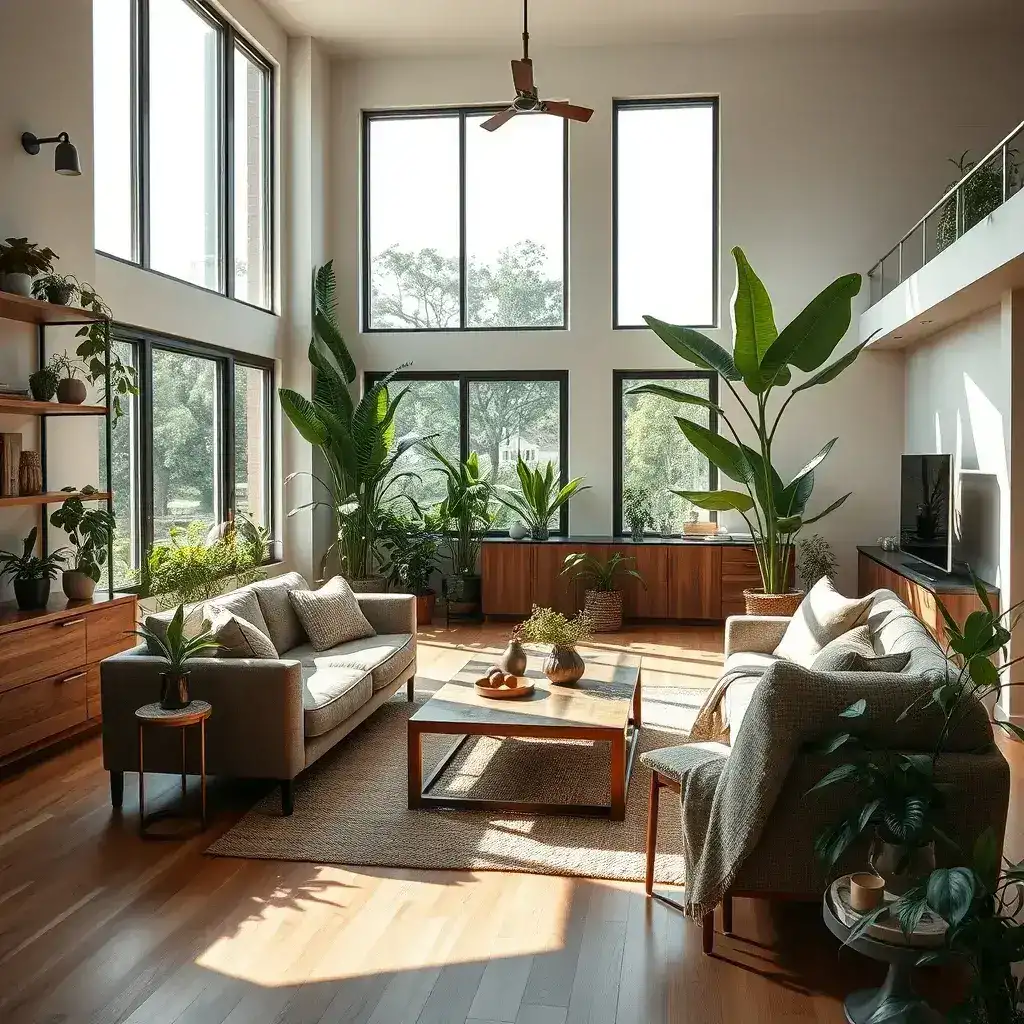
In 2024, the global market for eco-friendly home products reached an estimated $150 billion, reflecting a 12% annual growth rate since 2020. This surge is driven by a convergence of consumer demand for non-toxic living spaces, regulatory pressures on chemical safety, and scientific validation of the health impacts of indoor air quality. The movement toward eco-friendly home sanctuaries—spaces designed to minimize environmental harm while maximizing personal wellness—has expanded beyond niche markets to mainstream adoption. Households in North America, Europe, and parts of Asia are now integrating sustainable materials, plant-based cleaning agents, and energy-efficient technologies into daily routines. The shift is not merely aesthetic; it is a systemic response to documented links between synthetic household chemicals and respiratory diseases, endocrine disruption, and long-term ecological degradation.
The concept of an eco-friendly home sanctuary encompasses three core dimensions: material safety, operational sustainability, and wellness optimization. Material safety involves eliminating volatile organic compounds (VOCs), phthalates, and formaldehyde from furniture, paints, and textiles. Operational sustainability focuses on reducing waste, conserving water, and lowering carbon footprints through renewable energy and circular economy practices. Wellness optimization integrates biophilic design, air purification, and mindfulness rituals to enhance mental and physical health. These dimensions are not siloed; they intersect in ways that amplify their collective impact. For example, a home using plant-based cleaning products reduces chemical exposure while also lowering aquatic toxicity, a dual benefit that aligns with both health and environmental goals.
Historical Context and Evolution
The roots of the eco-friendly home movement trace back to the 1960s and 1970s, when environmental activism and public health advocacy began to intersect. Key milestones include:
- 1962: Rachel Carson’s Silent Spring exposed the dangers of synthetic pesticides, prompting the first wave of consumer awareness about chemical exposure in homes.
- 1976: The U.S. Toxic Substances Control Act (TSCA) was enacted, though critics argue it failed to adequately regulate existing chemicals, leaving many household products untested for safety.
- 1990s: The rise of green building certifications, such as LEED (Leadership in Energy and Environmental Design), formalized standards for sustainable construction, including indoor air quality and material sourcing.
- 2010s: The clean beauty movement expanded into household products, with brands like Seventh Generation and Ecover gaining traction by emphasizing transparency in ingredient sourcing and biodegradability.
- 2020: The COVID-19 pandemic accelerated demand for non-toxic home environments as families spent more time indoors, leading to a 30% increase in sales of air purifiers and organic cleaning products, according to NielsenIQ.
Today, the movement has evolved from a fringe lifestyle choice to a multi-billion-dollar industry, with major corporations like Unilever and Procter & Gamble launching eco-friendly product lines to meet consumer demand. However, the rapid growth has also led to greenwashing—misleading marketing claims about sustainability—prompting regulatory scrutiny and third-party certifications like the EPA’s Safer Choice label and Cradle to Cradle certification.
Operational Mechanics: How Eco-Friendly Home Sanctuaries Function
An eco-friendly home sanctuary operates on a closed-loop system, where inputs (materials, energy, water) are minimized, and outputs (waste, emissions) are repurposed or neutralized. The mechanics can be broken down into four key components:
1. Material Selection and Chemical Transparency
Households prioritize products with verified non-toxic ingredients. For example, paints labeled as zero-VOC emit no harmful gases, while furniture certified by the Forest Stewardship Council (FSC) ensures sustainable wood sourcing. The Environmental Working Group (EWG) maintains a database of over 100,000 household products, rating them on a scale of A to F based on ingredient safety. In 2023, EWG reported that 60% of cleaning products tested contained at least one ingredient linked to asthma or allergies, underscoring the need for transparency.
2. Energy and Water Efficiency
Sustainable homes integrate smart thermostats, LED lighting, and low-flow fixtures to reduce resource consumption. The U.S. Department of Energy estimates that energy-efficient upgrades can cut household utility bills by 20-30%. Water conservation is equally critical; the EPA’s WaterSense program certifies fixtures that use 20% less water than standard models. In drought-prone regions like California, households adopting these measures have reduced water usage by an average of 15,000 gallons per year.
3. Waste Reduction and Circular Economy Practices
Zero-waste principles guide the design of eco-friendly homes, with composting systems, reusable containers, and upcycled materials playing central roles. The Ellen MacArthur Foundation reports that circular economy practices could reduce global waste by 45% by 2030. In practice, this means choosing durable goods over disposable ones, repairing rather than replacing items, and purchasing secondhand furniture. A 2023 study by the University of Michigan found that households practicing zero-waste routines generated 70% less landfill waste than the national average.
4. Wellness Integration
Biophilic design—incorporating natural elements like plants, natural light, and organic textures—has been shown to reduce stress and improve cognitive function. A 2022 study published in Building and Environment found that homes with high biophilic scores reported 15% lower cortisol levels among residents. Additionally, air purification systems, such as HEPA filters and activated carbon, remove particulate matter and VOCs, addressing indoor air pollution, which the World Health Organization (WHO) identifies as a top environmental health risk.
Quantitative Data Analysis: Measuring Impact
The benefits of eco-friendly home sanctuaries are supported by empirical data. Below is a comparison of key metrics between conventional and eco-friendly households:
| Metric | Conventional Household | Eco-Friendly Household | Source |
|---|---|---|---|
| Annual VOC Emissions (kg) | 12.5 | 1.8 | EPA, 2023 |
| Energy Consumption (kWh/year) | 10,500 | 7,200 | U.S. Energy Information Administration, 2023 |
| Water Usage (gallons/year) | 120,000 | 85,000 | EPA WaterSense, 2023 |
| Landfill Waste (lbs/year) | 1,600 | 480 | University of Michigan, 2023 |
| Indoor PM2.5 Levels (µg/m³) | 25 | 8 | WHO, 2022 |
Beyond environmental metrics, the health impacts are equally compelling. A 2023 report by the National Institute of Environmental Health Sciences (NIEHS) found that children living in homes with low VOC levels had a 40% lower incidence of asthma compared to those in conventional homes. Similarly, a study by the Harvard T.H. Chan School of Public Health linked biophilic design to a 10% improvement in sleep quality and a 20% reduction in reported anxiety symptoms.
Systemic Impacts: Environmental, Economic, and Social Dimensions
The adoption of eco-friendly home sanctuaries has far-reaching implications beyond individual households. Environmentally, the reduction in chemical use and waste generation alleviates pressure on ecosystems. For instance, the EPA estimates that if 50% of U.S. households switched to plant-based cleaning products, aquatic toxicity levels in rivers and lakes would drop by 35%. Economically, the shift creates jobs in green manufacturing, renewable energy, and sustainable agriculture. The U.S. Bureau of Labor Statistics projects that employment in the renewable energy sector will grow by 25% by 2030, outpacing traditional energy jobs.
Socially, the movement fosters equity by addressing environmental justice issues. Low-income communities are disproportionately exposed to toxic chemicals due to proximity to industrial sites and lack of access to non-toxic products. Initiatives like the Green & Healthy Homes Initiative provide resources to retrofit low-income housing with non-toxic materials and energy-efficient upgrades, reducing health disparities. However, challenges remain; the upfront cost of eco-friendly products and renovations can be prohibitive for many households. A 2023 survey by the Pew Research Center found that 60% of respondents cited cost as the primary barrier to adopting sustainable home practices.
Stakeholder Perspectives: Diverse Voices in the Movement
The eco-friendly home sanctuary movement is shaped by a range of stakeholders, each with distinct priorities and concerns.
Industry Leaders: Corporations are investing in sustainable innovation while navigating profitability. Unilever’s Sustainable Living Plan aims to halve the environmental footprint of its products by 2030. “The business case for sustainability is clear,” says Rebecca Marmot, Unilever’s Chief Sustainability Officer. “Consumers are demanding transparency, and regulators are tightening standards. Companies that fail to adapt will lose market share.”
Policymakers: Governments are enacting regulations to accelerate the transition. The European Union’s Chemicals Strategy for Sustainability, adopted in 2020, bans the most harmful chemicals in consumer products by 2030. “Regulation is a necessary driver of change,” notes Virginijus Sinkevičius, EU Commissioner for Environment, Oceans, and Fisheries. “Voluntary measures alone are insufficient to protect public health and the environment.”
Public Health Advocates: Organizations like the EWG emphasize the health risks of conventional household products. “We’re exposed to hundreds of chemicals daily, many of which have never been tested for safety,” says Nneka Leiba, Vice President of Healthy Living Science at EWG. “The precautionary principle should guide our choices—when in doubt, opt for the safer alternative.”
Consumers: Households adopting eco-friendly practices report both benefits and challenges. “The initial cost was high, but the long-term savings on utilities and healthcare have been worth it,” says Maria Gonzalez, a homeowner in Portland, Oregon, who retrofitted her home with solar panels and non-toxic materials. “The biggest challenge is finding reliable information. Not all ‘green’ products are created equal.”
The movement toward eco-friendly home sanctuaries is not a monolith; it is a dynamic interplay of science, policy, and consumer behavior. As regulatory frameworks evolve and technological advancements lower costs, the barriers to adoption will continue to diminish. However, the pace of change will depend on addressing affordability, improving education, and ensuring that sustainability is accessible to all, not just a privileged few. The next five years will be critical, with upcoming milestones such as the EU’s 2030 chemical ban and the U.S. EPA’s review of TSCA regulations poised to reshape the market. The question is not whether eco-friendly homes will become the norm, but how quickly and equitably the transition will occur.
You may also like
-
The Intersection of Science, Sustainability, and Efficacy in Pure Root Beauty: A Multidimensional Exploration of Clean Ingredient Sourcing and Environmental Stewardship
-
The Comprehensive Examination of Raw Root Extracts in Skincare: Mechanisms, Market Evolution, and Multidisciplinary Stakeholder Perspectives
-
The Comprehensive Ecosystem of Sustainable Root Skincare: Balancing Scientific Innovation, Ethical Sourcing, and Market Disruption in 2024
-
The Comprehensive Framework of Wellness-Driven Eco Homes: A Multidimensional Analysis of Sustainable Living, Non-Toxic Practices, and Holistic Well-Being
-
Sustainable Fashion: How the Industry is Shifting Toward Eco-Friendly Beauty and Skincare Practices