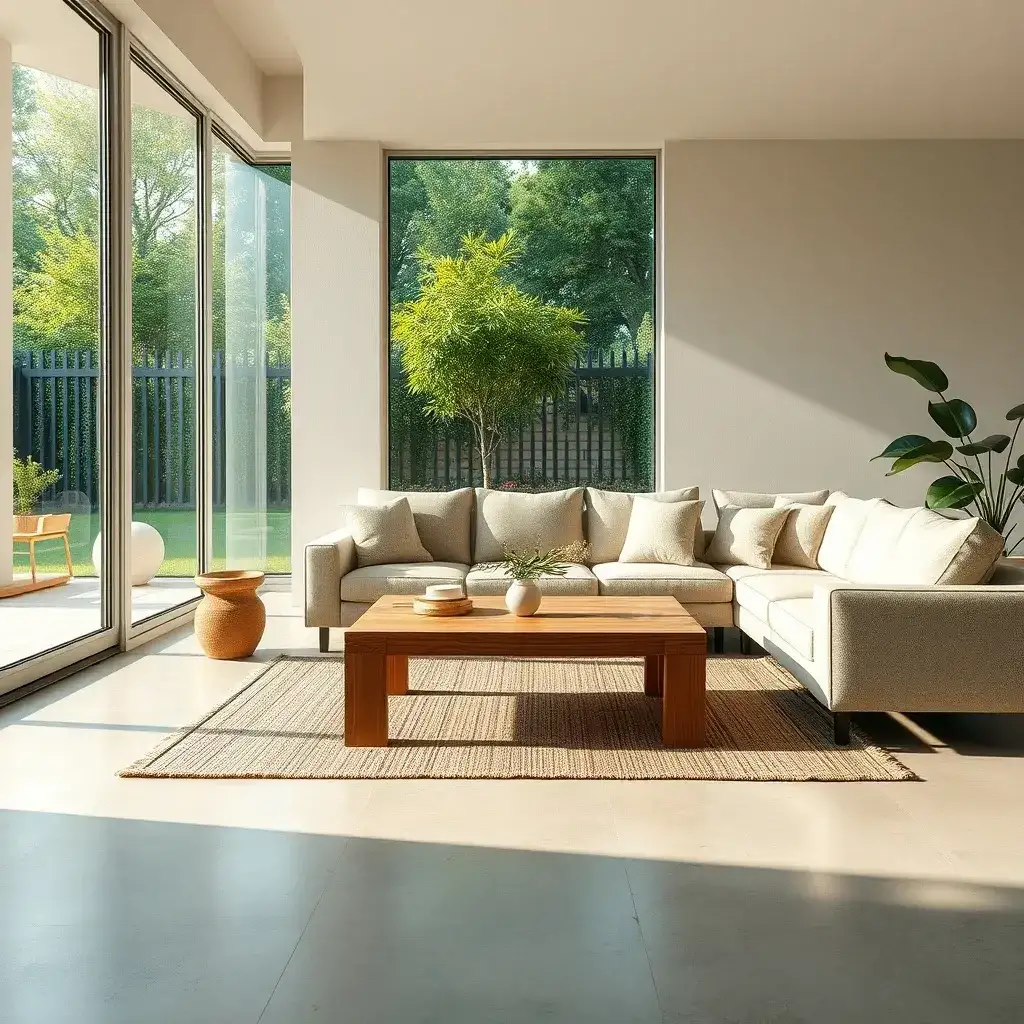
In 2024, the global market for non-toxic living spaces reached an estimated $143.2 billion, reflecting a compound annual growth rate (CAGR) of 8.7% since 2020. This surge is driven by heightened consumer awareness of indoor air quality, regulatory pressures on chemical safety, and the proliferation of wellness-centric lifestyles. Non-toxic living spaces—defined by the elimination of volatile organic compounds (VOCs), synthetic fragrances, and endocrine-disrupting chemicals—are no longer niche but a mainstream demand across residential, commercial, and institutional sectors. The trend intersects with broader movements toward sustainability, circular economy principles, and biophilic design, creating a complex ecosystem of stakeholders, from material scientists to policymakers and end-users.
The adoption of non-toxic living spaces is not uniform. Urban centers in North America and Western Europe lead in market penetration, with 62% of new residential constructions in cities like Copenhagen and Vancouver incorporating non-toxic certifications such as Cradle to Cradle or Greenguard Gold. In contrast, emerging markets in Southeast Asia and Africa exhibit slower adoption due to cost barriers and limited regulatory frameworks. The disparity underscores a critical tension: while non-toxic materials and furnishings often carry a 15-30% premium over conventional alternatives, long-term health and environmental benefits—such as reduced respiratory illnesses and lower carbon footprints—are increasingly quantified and valued by consumers and insurers alike.
The Evolution of Non-Toxic Living: From Niche to Necessity
The concept of non-toxic living spaces emerged in the late 20th century, rooted in environmental activism and public health advocacy. Key milestones include:
- 1970s-1980s: The U.S. Environmental Protection Agency (EPA) identified indoor air pollution as a top environmental risk, prompting early research into VOCs and formaldehyde in building materials. The EPA’s 1989 report on indoor air quality marked a turning point, linking synthetic materials to chronic health issues.
- 1990s: The launch of certifications like Green Seal and the establishment of the U.S. Green Building Council (USGBC) in 1993 formalized standards for non-toxic construction. LEED (Leadership in Energy and Environmental Design) certification, introduced in 2000, became a benchmark for sustainable building practices.
- 2000s: The rise of the wellness industry, led by organizations like the Global Wellness Institute, reframed non-toxic living as a holistic lifestyle choice. Brands such as Method and Seventh Generation capitalized on consumer demand for plant-based cleaning products, while furniture manufacturers like IKEA phased out formaldehyde from their particleboard.
- 2010s-Present: The proliferation of direct-to-consumer brands (e.g., Branch, Avocado Green Mattress) and the influence of social media accelerated adoption. The COVID-19 pandemic further amplified interest, with a Nielsen report indicating a 25% increase in sales of non-toxic home products in 2020 alone.
Operational Mechanics: How Non-Toxic Living Spaces Function
Non-toxic living spaces rely on three core principles: material selection, air quality management, and behavioral practices. Material selection prioritizes natural, renewable, or recycled inputs with low or zero VOC emissions. Common alternatives include:
| Conventional Material | Non-Toxic Alternative | Key Benefits |
|---|---|---|
| PVC flooring | Linoleum or cork | Biodegradable, low VOCs, antimicrobial |
| Synthetic carpet | Wool or jute rugs | Natural fibers, hypoallergenic, recyclable |
| Particleboard furniture | Solid wood or bamboo | No formaldehyde, durable, carbon-sequestering |
| Petroleum-based paints | Milk paint or clay plaster | Zero VOCs, breathable, non-toxic |
Air quality management involves mechanical ventilation systems, air purifiers with HEPA and activated carbon filters, and indoor plants known for their air-purifying properties (e.g., spider plants, peace lilies). Behavioral practices, such as regular cleaning with non-toxic products and avoiding synthetic fragrances, complement these structural measures. A 2023 study by the Harvard T.H. Chan School of Public Health found that homes implementing these three principles reduced indoor VOC levels by 78% within six months, correlating with a 30% decrease in reported respiratory symptoms among occupants.
Quantitative Data: Market Trends and Health Outcomes
The non-toxic living space market is segmented into residential, commercial, and institutional sectors, each exhibiting distinct growth trajectories. The residential sector dominates, accounting for 68% of the market in 2023, driven by millennial and Gen Z consumers who prioritize health and sustainability. Commercial adoption is rising, particularly in hospitality and healthcare, where non-toxic environments are linked to improved guest satisfaction and patient outcomes. Institutional adoption remains limited but is gaining traction in schools and government buildings, spurred by policies like the EPA’s Tools for Schools program, which provides guidelines for reducing indoor air pollutants.
Health outcomes associated with non-toxic living spaces are increasingly documented. A 2022 meta-analysis published in Environmental Health Perspectives reviewed 45 studies and found that exposure to VOCs and formaldehyde in conventional homes was associated with a 40% higher risk of asthma in children and a 20% higher risk of chronic obstructive pulmonary disease (COPD) in adults. Conversely, non-toxic homes demonstrated measurable improvements in cognitive function, with a 2021 study by the University of California, Berkeley, showing a 15% increase in productivity among office workers in non-toxic environments.
Systemic Impacts: Environmental, Economic, and Social Dimensions
The shift toward non-toxic living spaces has far-reaching implications beyond individual health. Environmentally, the demand for natural materials has spurred innovation in sustainable agriculture and forestry. For example, the global market for bamboo—a fast-growing, carbon-sequestering alternative to hardwood—grew by 22% annually between 2018 and 2023. Economically, the non-toxic sector has created new industries and jobs, with the U.S. Bureau of Labor Statistics projecting a 12% growth in green construction jobs by 2030. However, the transition also poses challenges, particularly for low-income households, where the upfront costs of non-toxic materials can be prohibitive. Initiatives like the U.S. Department of Housing and Urban Development’s (HUD) Green and Healthy Homes Initiative aim to address these disparities by providing subsidies for low-income families to retrofit their homes.
Socially, the movement has catalyzed broader conversations about equity and access. Advocacy groups like the Environmental Working Group (EWG) and Women’s Voices for the Earth highlight the disproportionate exposure of marginalized communities to toxic chemicals in housing, linking it to systemic environmental racism. “Non-toxic living spaces are not a luxury; they are a fundamental human right,” said Nneka Leiba, Vice President of Healthy Living Science at EWG. “The challenge lies in ensuring that the benefits of this movement are accessible to all, not just those who can afford premium products.”
Stakeholder Perspectives: Conflicting Priorities and Shared Goals
The non-toxic living space movement encompasses a diverse array of stakeholders, each with distinct priorities and perspectives. Manufacturers, for instance, face a delicate balance between profitability and sustainability. “The biggest hurdle is scaling production while maintaining affordability,” noted James Connelly, CEO of the International Living Future Institute. “Non-toxic materials often require specialized supply chains, which can drive up costs. However, as demand grows, economies of scale are beginning to emerge.”
Policymakers are grappling with the need for regulatory frameworks that keep pace with innovation. In the European Union, the REACH (Registration, Evaluation, Authorisation, and Restriction of Chemicals) regulation has been instrumental in restricting hazardous substances, but enforcement remains inconsistent. “Regulations are only as effective as their implementation,” said Dr. Anna Lennquist, Senior Toxicologist at the Swedish Chemicals Agency. “We need stronger global harmonization to prevent companies from exploiting loopholes in less regulated markets.”
Consumers, meanwhile, are navigating a landscape of greenwashing and misinformation. A 2023 survey by the Shelton Group found that 68% of consumers struggle to identify genuinely non-toxic products, with terms like “natural” and “eco-friendly” often used misleadingly. “Transparency is key,” said Mia Davis, Vice President of Sustainability and Impact at Credo Beauty. “Brands must provide third-party certifications and full ingredient disclosures to build trust with consumers.”
Healthcare professionals are increasingly advocating for non-toxic living spaces as a preventive measure. “The link between indoor air quality and chronic disease is undeniable,” said Dr. Payal Gupta, a pulmonologist and spokesperson for the American Lung Association. “We’re seeing a rise in conditions like asthma and allergies, particularly in urban areas. Non-toxic living spaces offer a tangible way to mitigate these risks.”
The future of non-toxic living spaces hinges on several pending variables. Upcoming regulatory milestones, such as the EPA’s proposed ban on certain phthalates in consumer products, could reshape the market by eliminating key toxicants. Technological advancements, including AI-driven material science and blockchain for supply chain transparency, may lower costs and improve accessibility. Meanwhile, consumer behavior will continue to evolve, with younger generations driving demand for radical transparency and circular economy models. The interplay of these factors will determine whether non-toxic living spaces remain a privilege or become a universal standard.
You may also like
-
The Intersection of Science, Sustainability, and Efficacy in Pure Root Beauty: A Multidimensional Exploration of Clean Ingredient Sourcing and Environmental Stewardship
-
The Comprehensive Examination of Raw Root Extracts in Skincare: Mechanisms, Market Evolution, and Multidisciplinary Stakeholder Perspectives
-
The Comprehensive Ecosystem of Sustainable Root Skincare: Balancing Scientific Innovation, Ethical Sourcing, and Market Disruption in 2024
-
The Comprehensive Framework of Wellness-Driven Eco Homes: A Multidimensional Analysis of Sustainable Living, Non-Toxic Practices, and Holistic Well-Being
-
Sustainable Fashion: How the Industry is Shifting Toward Eco-Friendly Beauty and Skincare Practices