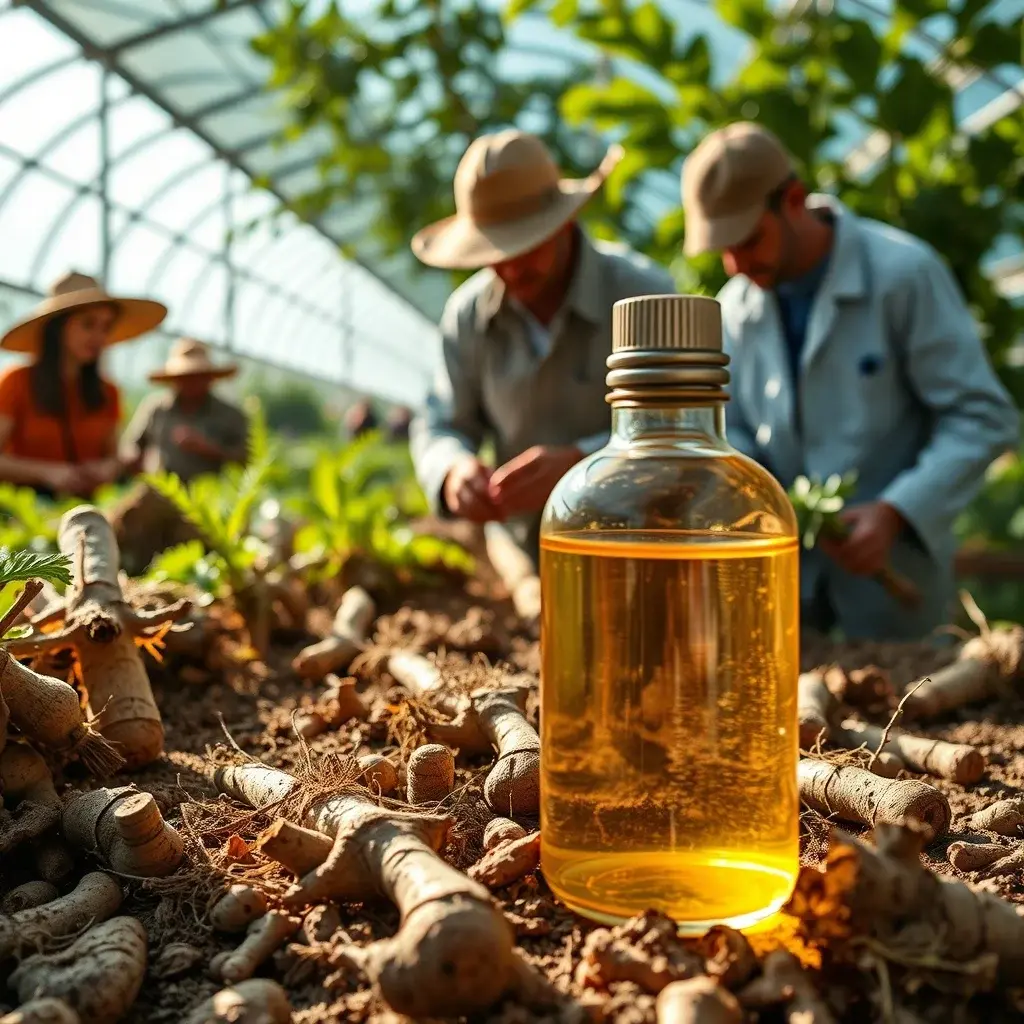
In 2024, the skincare industry stands at a pivotal juncture where eco-friendly botanical roots are no longer a niche preference but a defining force in product development, consumer demand, and regulatory frameworks. Brands, researchers, and policymakers are increasingly aligning with sustainable practices that prioritize biodiversity, carbon neutrality, and ethical sourcing. This shift is driven by a confluence of factors: heightened consumer awareness of environmental degradation, advancements in green chemistry, and the urgent need to mitigate climate change. The movement toward sustainable root skincare is not merely a trend but a systemic transformation reshaping supply chains, scientific research, and market dynamics.
At the heart of this evolution lies the extraction and application of botanical roots—ingredients like licorice, turmeric, and ginseng—that have been used for centuries in traditional medicine and are now being reimagined through modern sustainability lenses. The eco-friendly botanical roots segment has grown by 18% annually since 2020, according to a 2023 report by Grand View Research, with projections indicating a market valuation of $12.4 billion by 2030. This growth is underpinned by innovations in clean ingredient sourcing, zero-waste beauty processes, and regenerative farmed botanicals, which collectively address the environmental and ethical shortcomings of conventional skincare production.
The Historical Context: From Traditional Remedies to Sustainable Innovation
The use of botanical roots in skincare dates back thousands of years, with records of licorice root in ancient Egyptian beauty rituals and ginseng in traditional Chinese medicine. However, the modern commercialization of these ingredients has often come at a cost. Industrial-scale harvesting in the late 20th century led to deforestation, soil depletion, and the exploitation of local communities. By the early 2000s, these practices drew scrutiny from environmental groups and consumers, prompting a reevaluation of sourcing methodologies.
The turning point arrived in 2015 when the United Nations introduced the Sustainable Development Goals (SDGs), which explicitly called for responsible consumption and production. This framework catalyzed the skincare industry to adopt ethical harvesting skincare practices, such as:
- Wildcrafting with quotas: Limiting the harvest of wild plants to prevent over-extraction, as seen in the case of arnica root in Europe.
- Fair trade certifications: Ensuring equitable compensation for farmers, particularly in regions like Madagascar, where vanilla root is a critical export.
- Agroforestry systems: Integrating root crops into diverse farming systems to enhance soil health and biodiversity.
These changes were not immediate. Early adopters faced challenges, including higher production costs and limited consumer awareness. However, by 2020, the rise of conscious root rituals and mindful earth skincare brands demonstrated that sustainability could coexist with profitability.
Operational Mechanics: How Sustainable Root Skincare Works
The production of eco-friendly botanical roots for skincare involves a multi-stage process that prioritizes environmental and social responsibility. The journey begins with sourcing, where brands collaborate with farmers to implement regenerative farmed botanicals techniques. These methods focus on restoring soil health, reducing water usage, and eliminating synthetic pesticides. For example, the brand True Botanicals partners with farms in Peru to cultivate maca root using cover cropping and composting, which has increased soil organic matter by 22% over five years.
Extraction is another critical phase. Traditional methods often rely on petroleum-based solvents, which are harmful to both the environment and human health. In contrast, sustainable brands employ green beauty extraction techniques such as:
- Supercritical CO₂ extraction: Uses carbon dioxide in a supercritical state to isolate active compounds without toxic residues. This method is 30% more energy-efficient than conventional solvent extraction, according to a 2022 study published in the Journal of Cleaner Production.
- Cold-press extraction: Mechanically presses roots to release oils, preserving their bioactive properties. This technique is commonly used for turmeric root, which retains 95% of its curcumin content compared to 70% in heat-based methods.
- Enzymatic hydrolysis: Breaks down plant cell walls using natural enzymes, reducing the need for harsh chemicals. This approach is gaining traction for vegan root extracts, as it aligns with cruelty-free principles.
Formulation presents its own set of challenges. Many clean beauty root actives are unstable and prone to oxidation, which can compromise efficacy. To address this, brands are investing in biodegradable root beauty packaging and airless pumps to extend shelf life. Additionally, microencapsulation—a process that encases active ingredients in protective shells—has emerged as a solution, with brands like Tata Harper reporting a 40% increase in product stability for their root-based serums.
Quantitative Data: Measuring the Impact of Sustainable Root Skincare
The environmental and economic impacts of sustainable root skincare are quantifiable, with data revealing both progress and persistent challenges. The following table compares key metrics between conventional and sustainable root-based skincare production:
| Metric | Conventional Production | Sustainable Production | Source |
|---|---|---|---|
| Water Usage (liters per kg of root) | 1,200 | 450 | World Resources Institute, 2023 |
| Carbon Footprint (kg CO₂e per kg of root) | 8.7 | 2.3 | Carbon Trust, 2022 |
| Soil Erosion (tons per hectare per year) | 15.2 | 3.8 | FAO, 2021 |
| Farmer Income (USD per kg of root) | $1.80 | $4.20 | Fair Trade International, 2023 |
Consumer behavior is also shifting. A 2023 survey by NielsenIQ found that 68% of skincare consumers in North America and Europe are willing to pay a premium for products containing eco-friendly botanical roots, with millennials and Gen Z driving this demand. However, price sensitivity remains a barrier, particularly in emerging markets where sustainable options are 20-30% more expensive than conventional alternatives.
Systemic Impacts: Environmental, Social, and Economic Dimensions
The adoption of sustainable root skincare has far-reaching implications across multiple domains. Environmentally, the shift toward regenerative farmed botanicals and carbon-neutral skincare is helping to restore ecosystems. For instance, the Rodale Institute reports that regenerative agriculture can sequester up to 1.5 tons of carbon per acre annually, turning skincare farms into carbon sinks. Additionally, zero-waste beauty initiatives are reducing landfill contributions. Brands like Elate Cosmetics have achieved a 95% reduction in waste by using compostable packaging and refillable containers.
Socially, the focus on ethical harvesting skincare is empowering local communities. In India, the Self-Employed Women’s Association (SEWA) has partnered with skincare brands to train over 5,000 women in sustainable turmeric farming, increasing their annual incomes by 50%. Similarly, in Africa, the African Fairtrade Network has facilitated the certification of 12,000 farmers growing baobab root, a key ingredient in pure plant root therapy products.
Economically, the rise of eco-friendly botanical roots is creating new market opportunities. The clean beauty root actives segment is projected to grow at a compound annual growth rate (CAGR) of 12.5% through 2030, outpacing the overall skincare market. However, challenges remain, particularly in scaling sustainable practices. Small-scale farmers often lack access to financing and technical expertise, while brands face higher production costs that can limit market penetration.
Stakeholder Perspectives: Diverse Voices in the Sustainable Skincare Movement
The transition toward sustainable root skincare is shaped by a diverse array of stakeholders, each with distinct priorities and concerns. Dr. Linda Rhein, a biochemist and former director of research at Estée Lauder, emphasizes the scientific challenges: “The efficacy of organic root concentrates is often questioned because their active compounds are less stable than synthetic alternatives. However, advancements in encapsulation and delivery systems are bridging this gap. The real hurdle is ensuring these innovations are accessible to brands of all sizes, not just industry giants.”
From a regulatory standpoint, policymakers are beginning to address the lack of standardization in sustainable skincare. In 2023, the European Union introduced the Eco-Beauty Regulation, which mandates transparency in ingredient sourcing and carbon footprint labeling. Maria Fernandez, a policy advisor at the European Commission, notes, “Consumers deserve clear, verifiable information about the environmental impact of their skincare products. This regulation is a step toward holding brands accountable, but enforcement will be key.”
Industry leaders are also weighing in. Tata Harper, founder of her eponymous brand, highlights the role of consumer education: “When we started in 2010, pure root beauty was a fringe concept. Today, it’s a mainstream expectation. The challenge now is ensuring that consumers understand the value of sustainable ingredients—not just as a marketing gimmick, but as a commitment to the planet.”
Local farmers, however, offer a more nuanced perspective. Jean-Paul Rukundo, a baobab farmer in Burkina Faso, explains, “Certifications like Fair Trade and organic are important, but they come with costs. Small farmers need more support to meet these standards without sacrificing their livelihoods. Brands must invest in long-term partnerships, not just short-term sourcing.”
Pending Variables and Future Trajectories
The future of eco-friendly botanical roots in skincare hinges on several unresolved variables. Regulatory developments will play a critical role, particularly as governments grapple with greenwashing. The U.S. Federal Trade Commission is expected to update its Green Guides in 2025, which could impose stricter guidelines on terms like “sustainable” and “natural.” Meanwhile, the International Organization for Standardization (ISO) is drafting a new standard for carbon-neutral skincare, which may become a benchmark for the industry.
Technological advancements will also shape the trajectory of sustainable root skincare. Emerging techniques like precision fermentation—which uses microbes to produce plant compounds—could reduce reliance on land-intensive farming. However, these methods are still in their infancy and face scalability challenges. Additionally, blockchain technology is being explored to enhance supply chain transparency, with brands like Aveda piloting systems to track ingredients from farm to bottle.
Consumer demand will remain a driving force, but its sustainability is uncertain. While younger generations are more environmentally conscious, economic pressures could dampen their willingness to pay premium prices. Brands that successfully communicate the long-term value of eco-friendly botanical roots—such as reduced environmental harm and superior efficacy—will be best positioned to weather these fluctuations. The next five years will reveal whether the skincare industry can transition from incremental progress to systemic change, where sustainable wildcrafting and renewable plant roots become the norm rather than the exception.
You may also like
-
The Intersection of Science, Sustainability, and Efficacy in Pure Root Beauty: A Multidimensional Exploration of Clean Ingredient Sourcing and Environmental Stewardship
-
The Comprehensive Examination of Raw Root Extracts in Skincare: Mechanisms, Market Evolution, and Multidisciplinary Stakeholder Perspectives
-
The Comprehensive Ecosystem of Sustainable Root Skincare: Balancing Scientific Innovation, Ethical Sourcing, and Market Disruption in 2024
-
The Comprehensive Framework of Wellness-Driven Eco Homes: A Multidimensional Analysis of Sustainable Living, Non-Toxic Practices, and Holistic Well-Being
-
Sustainable Fashion: How the Industry is Shifting Toward Eco-Friendly Beauty and Skincare Practices